Tuesday, December 11, 2007

A compact synchrotron radiation source driven by a laser-plasma wakefield accelerator

Scientists tried to send the electrons generated from laser-plasma wakefield accelerator to the undulator to produce the light. This new experiment was reported in the recent Nature Physics.

The laser pulse is focused by an off-axis parabolic mirror into a supersonic helium gas jet where it accelerates electrons (blue line) to several tens of mega-electron volt energy. The electron beam profile may be monitored by a removable scintillating screen. The electrons propagate through an undulator, producing synchrotron radiation, and into a magnetic electron spectrometer. Radiation is collected by a lens and analysed in an optical spectrometer. The spectrometer is protected against direct laser and plasma exposure by a thin aluminium foil in front of the undulator.

Abstract: Ultrashort light pulses are powerful tools for time-resolved studies of molecular and atomic dynamics1. They arise in the visible and infrared range from femtosecond lasers2, and at shorter wavelengths, in the ultraviolet and X-ray range, from synchrotron sources3 and free-electron lasers4. Recent progress in laser wakefield accelerators has resulted in electron beams with energies from tens of mega-electron volts to more than 1 GeV within a few centimetres, with pulse durations predicted to be several femtoseconds9. The enormous progress in improving beam quality and stability makes them serious candidates for driving the next generation of ultracompact light sources. Here, we demonstrate the first successful combination of a laser-plasma wakefield accelerator, producing 55–75 MeV electron bunches, with an undulator to generate visible synchrotron radiation. By demonstrating the wavelength scaling with energy, and narrow-bandwidth spectra, we show the potential for ultracompact and versatile laser-based radiation sources from the infrared to X-ray energies.

Saturday, December 08, 2007

STED microscopy sees details on the nanoscale

Stimulated emission depletion (STED) microscopy has demonstrated that, contrary to a longstanding notion, diffraction-unlimited spatial resolution is viable with conventional lenses and visible light. Currently providing 15–70 nm resolution, it is entering the life sciences at a fast pace, while still undergoing technical improvements. Scientists from Max Planck Institute summarized its principles and recent outcomes. The whole summary should be found from optics.org.

A simple stage-scanning STED setup. Inset: overlay of the excitation focus (green) and the STED efficiency (red) for three different STED laser powers. Credit: Max Planck Institute for Biophysical Chemistry.

Thursday, December 06, 2007

Laser light alone can open, close world's fastest optical shutter without heating or cooling

A new study reports that a laser can be used to switch a film of vanadium dioxide back and forth between reflective and transparent states without heating or cooling it. It is one of the first cases that scientists have found where light can directly produce such a physical transition without changing the material’s temperature.

The study, "Coherent Structural Dynamics and Electronic Correlations during an Ultrafast Insulator-to-Metal Phase Transition in VO2", which was published in the Sept. 18 issue of Physical Review Letters, was conducted by a team of physicists from Vanderbilt University and the University of Konstanz in Germany headed by Richard Haglund of Vanderbilt and Alfred Leitenstorfer from Konstanz.

Sunday, December 02, 2007

World’s largest laser picks up the pace

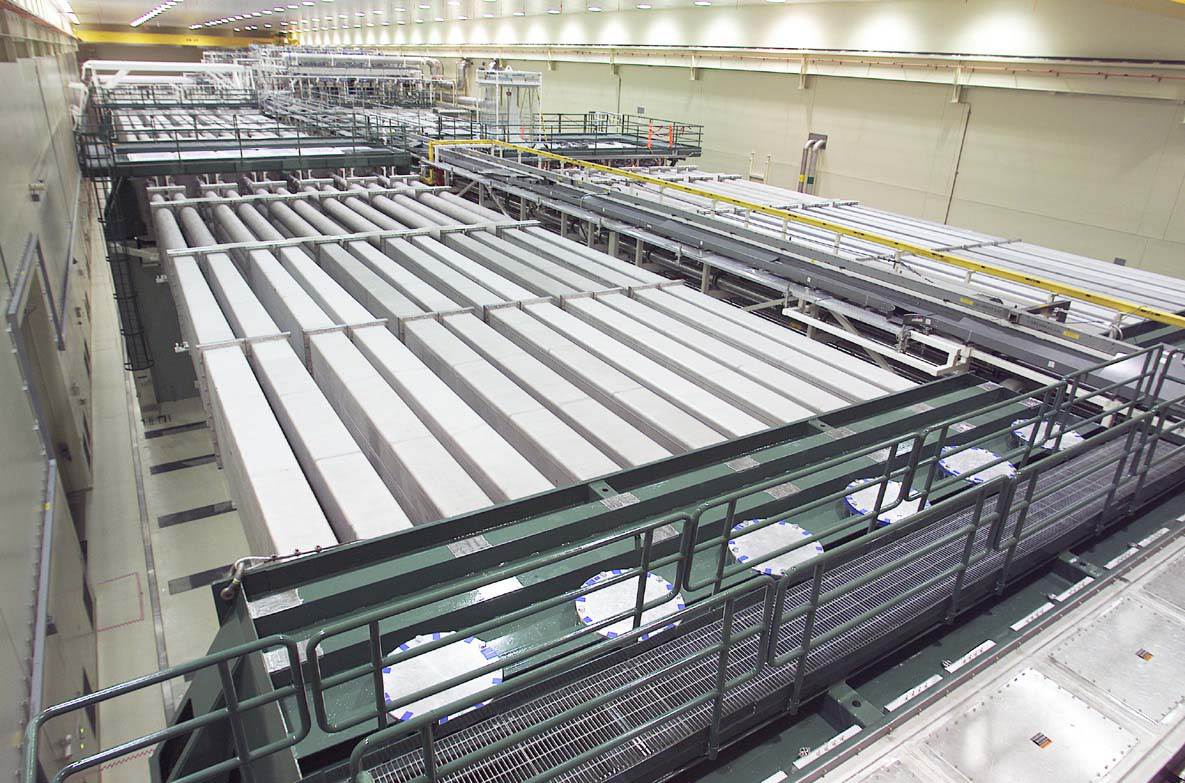
With their target completion date just a year and a half away, scientists and technicians at the National Ignition Facility (NIF) are quickening their pace to install and test the rest of NIF’s 192 lasers and prepare for a new round of preliminary experiments in 2008.

This is a report from Lawrence Livermore National Laboratory (LLNL) official web site:

Ninety-six NIF beamlines have been fired together for the first time, with “excellent” control system and laser stability, according to NIF & Photon Science Principal Associate Director Ed Moses. Last month the facility’s injection laser systems, which initiate the laser pulses, were fired for 144 beamlines.

“A total infrared energy of more than 2.5 megajoules has now been fired,” Moses said. “This is more than 40 times what the Nova laser (NIF’s predecessor) typically operated at the time it was the world's largest laser.”

The first of the facility’s two 96-beam laser bays was commissioned at the end of July. Each of the 96 beams fired an infrared output energy of about 22,000 joules, more than enough to meet NIF’s operational and performance requirements. Since then six more eight-beam “bundles” are being commissioned in the second laser bay, and three of these bundles have been operationally qualified.

Overall commissioning of the NIF beamlines is scheduled for 2009.

The laser shots last about 25 billionths of a second, a tiny fraction of the time it takes to blink an eye. Firing the beams requires operation of 2,300 high-quality optics and instrumentation modules and nearly 400 computers running a million lines of control system code.

The tests measure the quality of each beam’s spatial profile and temporal pulse shape. Even though each shot is exceedingly short in time, its energy output and frequency is designed to vary significantly throughout its duration depending on the type of experiments being conducted.

Meanwhile, data gathered from experiments conducted at NIF in 2003-2004 have enabled sophisticated computer simulations that confirm NIF’s ability to reach the energy levels and beam quality required to produce the world’s first demonstration of inertial confinement fusion.

The “NIF Early Light” experiments included four shots using four laser beams at high energy on a full-scale target for the first time. Simulations of the experiments on LLNL’s world-class supercomputers matched the actual experimental data to an unprecedented degree. The experiments and simulations indicate that NIF’s laser beams will propagate effectively in plasma-filled targets designed to achieve fusion ignition and thermonuclear burn.

NIF experiments next year will focus 96 beams on a gold hohlraum (the eraser-sized capsule containing the fusion target) filled with a light gas mixture. Dubbed “Eos” for the Greek goddess of dawn, the experiments will use the first set of beams from the completed laser bay, traveling to the center of the ten-meter diameter target chamber. They are designed to help validate key aspects of the full-scale ignition campaign that begins in 2010.

Thursday, November 29, 2007

Photonic crystal fiber produces ultrafast pulses

Reported from optic.org:

A new design of hollow-core photonic crystal fiber (HC PCF) has been developed by an international team led by Fetah Benabid of Bath University in the UK. One immediate result has been a method to produce attosecond laser pulses more efficiently than previous techniques.

The fiber's unique properties have led directly to a second breakthrough, the efficient generation of a broad spectrum of ultrafast pulses from a hydrogen-filled PCF through stimulated Raman scattering.

The conventional technique to create attosecond pulses is high-harmonic generation (HHG), which produces central wavelengths in the XUV or soft X-ray region through the firing of a very intense laser pump pulse into a gas. Benabid's fiber was able to produce ultrashort pulses more simply using through stimulated Raman scattering. Benabid's fiber is claimed to require a pump pulse with power levels six orders of magnitude lower and five orders of magnitude longer than those previously needed for HHG.

Monday, October 29, 2007

Surface heating of wire plasmas using laser-irradiated cone geometries

It's reported on the recent issue of Nature Physics.

Petawatt lasers can generate extreme states of matter, making them unique tools for high-energy-density physics. Pressures in the gigabar regime can potentially be generated with cone-wire targets when the coupling efficiency is high and temperatures reach 2–4 keV. The only other method of obtaining such gigantic pressures is to use the megajoule laser facilities being constructed (National Ignition Facility and Laser MégaJoule). The energy can be transported over surprisingly long distances but, until now, the guiding mechanism has remained unclear. Here, we present the first definitive experimental proof that the heating is maximized close to the wire surface, by comparison of interferometric measurements with hydrodynamic simulations. New hybrid particle-in-cell simulations show the complex field structures for the first time, including a reversal of the magnetic field on the inside of the wire. This increases the return current in a spatially separated thin layer below the wire surface, resulting in the enhanced level of ohmic heating. There are a significant number of applications in high-energy-density science, ranging from equation-of-state studies to bright, hard X-ray sources, that will benefit from this new understanding of energy transport.

LSP modelling of the azimuthal magnetic field structure at the cone tip, 600 fs after the main interaction. A reversed field can be seen on the inside of the wire surface corresponding to the ohmic return current, which is shown on the right picture.

Generation of intense continuum EUVradiation by many-cycle laser fields

The scientists at Institute of Electronic Structure & Laser in Greece and Max-Planck-Institut für Quantenoptik in Germany reported their research results in recent issue of Nature Physics.

Continuing efforts in ultrashort pulse engineering have recently led to the breakthroughs of the generation of attosecond (10^-18 s) pulse trains and isolated pulses. Although trains of multiple pulses can be generated through the interaction of many-optical-cycle pulses with gases—a process that has led to intense extreme-ultraviolet emission—the generation of isolated high-intensity pulses, which requires few-cycle driving pulses, remains a challenge. Here, we report a vital step towards the generation of such pulses, the production of broad continuum extreme-ultraviolet emission using a high-intensity, many-cycle, infrared pulsed laser, through the interferometric modulation of the ellipticity of 50-fs-long driving pulses. The increasing availability of high-power many-cycle lasers and their potential use in the construction of intense attosecond radiation—with either gas or solid-surface targets—offer exciting opportunities for multiphoton extreme-ultraviolet-pump–extreme-ultraviolet-probe studies of laser–matter and laser–plasma interactions.

The Dual Michelson interferometer device is shown in the left picture, BS: beam splitters. M: flat mirrors. TS1,2,3: piezoelectric translation stages. A: intensity attenuator. First and second MI: first and second Michelson interferometers.

Wednesday, October 17, 2007

Beam Homogenizer

A beam homogenizer is a device that smooths out the irregularities in a laser beam profile and creates a more uniform one. Most beam homogenizers use a multifaceted mirror with square facets. The mirror reflects light at different angles to create a beam with uniform power across the whole beam profile (a "top hat" profile).

The best results have been achieved with fly eye homogenizers which are composed of individually polished cylindrical lenses. The incoming laser beam is divided by an array of cylindrical lenses f_1 into several beamlets with size d. These beamlets match with the cylindrical lenses of a second array f_2. This second array and a condenser lens f_3 overlap all these beamlets in the focal plane of f_3. The homogenizer size D is proportional to the focal length of the collecting lens, the diameter and focal length of the micro-lens, and can be calculated using Equation:

D=(f_3/f_2)d

Interested Links:
Beam-shaping optics expand excimer-laser applications
How to Design a Gaussian to Top-Hat Beam Shaper

Friday, October 05, 2007

Solar laser or solar energy laser?

Based on the news from Optics.org, Japanese team revives solar lasers in quest for clean fuels.

The idea of using solar energy to power lasers is not new. Current designs work by using a system of mirrors to concentrate sunlight into an Nd:YAG crystal, but these lasers are not widely used because they require huge mirrors to collect the light – and even then achieve only low efficiency.

To address these issues, Takashi Yabe and colleagues at the Tokyo Institute of Technology experimented with using a Fresnel lens instead of mirrors as light collectors. They also found that doping the Nd:YAG crystal with small amounts of chromium significantly increases the power output of the laser.

The laser demonstrated by the team produces a power output of 24 W at 1064 nm. The design, which incorporates a 1.3 m2 Fresnel lens, offers an unprecedented slope efficiency of 12% above a threshold solar input of 500 W.

Tuesday, August 28, 2007

Compressor Alignment Procedure

I concentrated on the pulse compressor these days. Several motors were used to control two big 1200 line/mm gratings. The motors were controlled by Aerotech UNIDEX 511 motion controller. The computer interface program was written in LabView. It's easy to change the grating reflected angles and distances by rotating a hand wheel. The alignment procedure is:

1). Steering the mirrors to center the beam in the grating G1.
2). Set G1 to 0 degree to check the retro reflection.
3). Set G1 to Littrow angle (28.76 in our case) by adjusting the rock.
4). Change G1 to 13.358 for deviation.
5). Set G2 angle 26.716 for 0 degree back reflection checking.
6). Set G2 angle 55.48 for Littrow checking.
7). Set G1 and G2 both 13.358 degree.

related link: UNIDEX 511

Wednesday, August 22, 2007

Far-field distribution of the seed beam after 3rd ampfilfier

After checking the mirrors and cleaning the dirty ones, we measured the beam profile again. By changing the distance between convex lens and CCD camera, we can measure the far-field distribution of the seed beam. We believed the beam was still good after passing the third amplifier and many reflected mirrors.

Monday, August 20, 2007

Measuring the seed beam profile after 3rd amplifier

We measured the seed beam profile after third amplifier, the CCD camera was put behind the convex mirror of the telescope.

Because the camera was closed to the mirror, we measured the intensity distribution. From the picture shown in the right, we found there were some dust or damaged parts. We should check the optical path and optical components to find what caused this ugly beam profile.

Tuesday, August 14, 2007

YAG #4 beam alignment

Before running the third amplifier, it's necessary to check pump laser beam qualities of YAG #3 and YAG #4. We found the some beam delivering mirrors for YAG #4 had been burned. Two mirrors were replaced by the new ones, the other two mirrors were just carefully rotated to avoid beam hit the small burned dots.

It's so excited that the spectrometer can be controlled by the desktop.

Thursday, August 09, 2007

Beam profile before the third amplifier

After cleaning the delivering mirrors one by one, we measured the beam profile before inputing the third amplifier. This time, the beam looked similar to the Gaussian shape perfectly.

Femtosecond time-delay X-ray holography

Researchers have used the ultrafast X-ray pulses from a free-electron laser to image a nanoscale object in just a femtosecond. The technique, which is a new form of X-ray holography, has been pioneered by Henry Chapman from Lawrence Livermore National Laboratory and colleagues in the US, Switzerland and Germany. Being able to study materials so fast brings us one step closer to the holy grail of observing, at the same time, how all the atoms in a molecule move (Nature 448 676).

The incident FEL pulse from the left passes through a hole in a multilayer-coated detector mirror. The 'dusty mirror' consists of particles on a 20-nm-thick silicon nitride membrane backed by a multilayer-coated plane mirror. This returns the direct beam back through the hole in the detector mirror, which reflects the diffracted light onto a CCD detector. The prompt diffraction (blue, the reference wave) and delayed diffraction (red, the object wave) interfere to generate the hologram on the CCD detector.

Wednesday, August 08, 2007

Realigning the laser pulse stretcher

It's very hard to increase the output energy from the second amplifier, even optimizing the cavity more carefully. The problem might come from the front end, we traced the beam and found it's very weak after the stretcher. So it took time to realign the laser path and made the dim laser dot became very bright.

The first amplifier output energy without the saturater was around 5 mV (normally ~4 mV), it's about more than 2 mV with the saturater (normally ~1 mV). The output from second amplifier reached about 400 mV. The beam was delivered into the spatial filter and measured the profile using the CCD camera. The diffraction pattern indicated there was a dust or damage on some mirror surface.

Tuesday, August 07, 2007

Spectrum from laser osillator

A loptop was used to replace the old desktop. In the beginning the spectrometer S2000-USB could not be recognized by the laptop. Somebody suggested to try another USB port, then the signal was appeared on the screen. This indicated the laptop remembered the original port connecting the hardware.

The snapshot of the spectra is shown on the right, the blue color line is reference spectrum, the red one is the real-time spectrum.

Thursday, August 02, 2007

The Control Computer Out of Order

I planed to run the whole system today, unfortunately I found the computer controlling the Ocean Optics S2000 spectrometer was down in the morning. I tried to restart the computer many times, it's no response. Because this spectrometer is used to monitor the laser spectrum, which can show if mode-locking status. The control computer must be repaired as soon as possible. The connection adapter is ADC1000-USB(S/N ADUD5565), the software is OOIBASE32.

The computer power supply was totally dead, I tried another computer. However it's not easy to run OOIBEASE32 in the new computer. I tried a laptop which the software has been install, but it cannot recognize the hardware.

Tuesday, July 31, 2007

Crystal surface burned again

When the output energy after the PC2 became lower, I tried to tune the pump mirrors to maximize the output. During the tuning, I found the energy really became bigger, unfortunately the left side of the crystal was burned again. The similar phenomenon happened before, I think the measured energy was not the laser pulse but the spontaneous emission. When ASE goes higher, the pump beam was focused smaller, which would damage the crystal surface. Next tuning time, it's better to measure the pulse shape using the diode and make sure no ASE anymore.

I also found the Ti:sapphire crystal was not installed well, I put more Indium layer to hold the crystal tightly. Then I realigned the amplifier #1, changed the times of optical pass from 6 to 7.

Monday, July 30, 2007

Creating the pinhole for the spatial filter

I optimized the amplifier #2 alignment and obtained the normal output energy. Then the beam was delivered into the spatial filter. We already installed a piece of window for burning the pinhole last week. The seed beam from oscillator was blocked, so the ASE beam from first and second amplifiers was used to burn the hole. After about one and half hours, the beam could be watched from the spatial filter other side. The beam profile looked good by eyes, the real profile should be measured using the SPIRICON LBA camera.