Nature Physics
Published online: 30 May 2008 | doi:10.1038/nphys982
 X-ray beams from an energy-recovery linac (linear accelerator) could be both a thousand times brighter and a thousand times faster--with pulses as brief as one ten-thousandth of a billionth of a second--than current state-of-the-art synchrotron X-ray sources.
 Scientists would ideally like to produce EUV light directly from the oscillator without the need for expensive and bulky amplifiers. In this way, EUV-light generation could be simplified and the size of the source significantly reduced to tabletop dimensions. In contrast, current devices usually measure around 2–3 m across. Now, Seung-Woo Kim of KAIST in Daejeon and colleagues have shown that this might be possible.
 The University of Rochester will mark another important step in the effort toward attaining sustainable fusion, the ultimate source of clean energy, Friday, May 16.
 The research team – which also included former graduate students Pablo Gabolde and Selcuk Akturk – used the concept of interferometry to measure a pulse in space and time. Two pulses, one reference and one unknown, were sent through optical fibers. The fibers were mounted on a scanning stage so that the pulses could be measured at many locations around the focus.
 X-ray scattering images (above) and corresponding 3D depictions (below) of nucleation events, or "bubbles," forming in the semiconductor Indium Antimonide in the first instances after being hit with a laser pulse.
 The Texas Petawatt laser produced a petawatt of peak power on March 31, making it the highest powered laser in the world, said Todd Ditmire, a physicist at the University of Texas at Austin.
 Spatial phase and focal spot measurements using a low-energy pulsed probe before the fourth shot of a kJ shot sequence (5 shots, one shot every hour): a) and b): before and after the closed-loop convergence. c) Focal spot measurement during the fourth shot.

 Now it is possible to see a movie of an electron. The movie shows how an electron rides on a light wave after just having been pulled away from an atom. This is the first time an electron has ever been filmed, and the results are presented in the latest issue of Physical Review Letters.
 The people on HERCULES laser at the University of Michigan has claimed to have created the most intense laser pulse in the universe.
 A tabletop femtosecond laser has been used to change the surface properties of metals to reflect a specific color or combination of colors. Silver, platinum, gold, and other metals have been turned colors such as blue, gray, black, and purple.
 The X-ray beam is generated from the electron storage ring. The fill pattern shown is the hybrid-singlet mode: a single electron bunch (150 ps long and carrying 15 mA of current) is separated from a longer train of electrons (472 ns long, 94 mA) by a 1.59
  s gap on both sides. The fast shutter absorbs more than 99% of the beam power, and lets the beam through for a few milliseconds at 1 Hz. The sample image is formed on a fast scintillator crystal (LYSO:Ce) and read on a CCD (charge-coupled device) camera via a microscope objective and a mirror at 45° angle. The inset shows the APS undulator-A energy spectrum at 31 mm gap on a logarithmic scale. The fundamental sharp peak at 13.3 keV is 100 times brighter than the harmonics.
 The entrance pupil of a system is the image of the aperture stop as seen from an axial point on the object through those elements preceding the stop. In contrast, the exit pupil is the image of the aperture stop as seen from an axial point on the image plane through the interposed lenses, if there are any.
 The definition of pupil can be found from any optics textbook, however it's still hard to imagine what difference between the exit and entrance pupils. After seeing the left picture, you may impress the pupil on the memory. It's a normal camera lens, the entrance pupil is the image of aperture from the front side, and the exit pupil is the image of the same aperture from the back side .
 The laser pulse is focused by an off-axis parabolic mirror into a supersonic helium gas jet where it accelerates electrons (blue line) to several tens of mega-electron volt energy. The electron beam profile may be monitored by a removable scintillating screen. The electrons propagate through an undulator, producing synchrotron radiation, and into a magnetic electron spectrometer. Radiation is collected by a lens and analysed in an optical spectrometer. The spectrometer is protected against direct laser and plasma exposure by a thin aluminium foil in front of the undulator.
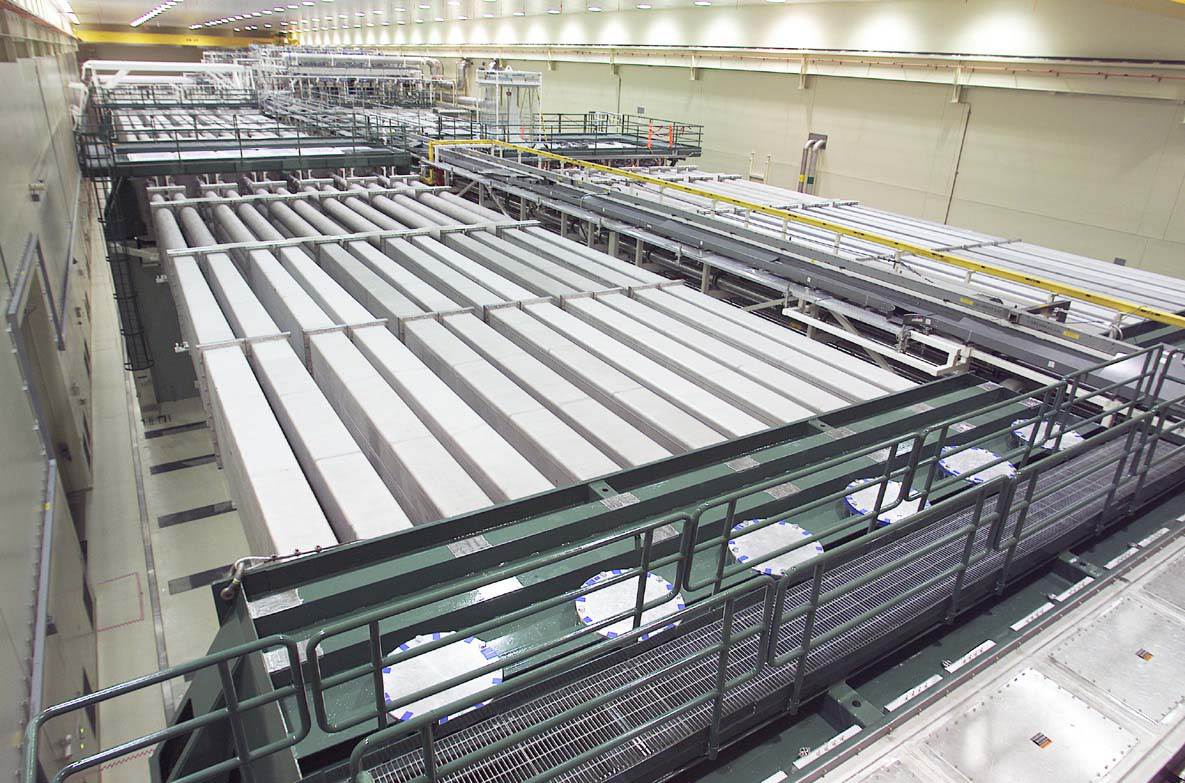 The first of the facility’s two 96-beam laser bays was commissioned at the end of July. Each of the 96 beams fired an infrared output energy of about 22,000 joules, more than enough to meet NIF’s operational and performance requirements. Since then six more eight-beam “bundles” are being commissioned in the second laser bay, and three of these bundles have been operationally qualified.
 The fiber's unique properties have led directly to a second breakthrough, the efficient generation of a broad spectrum of ultrafast pulses from a hydrogen-filled PCF through stimulated Raman scattering.
 This increases the return current in a spatially separated thin layer below the wire surface, resulting in the enhanced level of ohmic heating. There are a significant number of applications in high-energy-density science, ranging from equation-of-state studies to bright, hard X-ray sources, that will benefit from this new understanding of energy transport.
 individually polished cylindrical lenses. The incoming laser beam is divided by an array of cylindrical lenses f_1 into several beamlets with size d. These beamlets match with the cylindrical lenses of a second array f_2. This second array and a condenser lens f_3 overlap all these beamlets in the focal plane of f_3. The homogenizer size D is proportional to the focal length of the collecting lens, the diameter and focal length of the micro-lens, and can be calculated using Equation:
 To address these issues, Takashi Yabe and colleagues at the Tokyo Institute of Technology experimented with using a Fresnel lens instead of mirrors as light collectors. They also found that doping the Nd:YAG crystal with small amounts of chromium significantly increases the power output of the laser.
 |  |
 We measured the seed beam profile after third amplifier, the CCD camera was put behind the convex mirror of the telescope.
 Before running the third amplifier, it's necessary to check pump laser beam qualities of YAG #3 and YAG #4. We found the some beam delivering mirrors for YAG #4 had been burned. Two mirrors were replaced by the new ones, the other two mirrors were just carefully rotated to avoid beam hit the small burned dots.
 After cleaning the delivering mirrors one by one, we measured the beam profile before inputing the third amplifier. This time, the beam looked similar to the Gaussian shape perfectly.
 The incident FEL pulse from the left passes through a hole in a multilayer-coated detector mirror. The 'dusty mirror' consists of particles on a 20-nm-thick silicon nitride membrane backed by a multilayer-coated plane mirror. This returns the direct beam back through the hole in the detector mirror, which reflects the diffracted light onto a CCD detector. The prompt diffraction (blue, the reference wave) and delayed diffraction (red, the object wave) interfere to generate the hologram on the CCD detector.
 It's very hard to increase the output energy from the second amplifier, even optimizing the cavity more carefully. The problem might come from the front end, we traced the beam and found it's very weak after the stretcher. So it took time to realign the laser path and made the dim laser dot became very bright.
 A loptop was used to replace the old desktop. In the beginning the spectrometer S2000-USB could not be recognized by the laptop. Somebody suggested to try another USB port, then the signal was appeared on the screen. This indicated the laptop remembered the original port connecting the hardware.
